


In many zero liquid discharge (ZLD) projects, the failure point is not the evaporator itself. The real problem appears upstream.
When the front-end concentration step is not designed properly, high TDS, high COD, high hardness, silica, fluoride, colloids, and suspended solids quickly push conventional spiral-wound RO to its operational limit. The result is predictable: rapid fouling, pressure increase, low recovery, unstable performance, or the need to feed poorly concentrated brine directly into MVR. That leads to high energy consumption, severe scaling, and expensive downtime.
This is where DTRO (Disc Tube Reverse Osmosis) becomes highly relevant.
DTRO is not a replacement for the entire ZLD train. Its real value is more practical: it reduces volume, improves feed conditions, and protects downstream thermal equipment. In other words, DTRO helps the system reach the evaporator in a much better state.
For industrial wastewater projects, landfill leachate treatment, and high-salinity ZLD front-end concentration, this is often the difference between a stable plant and an underperforming one.
DTRO stands for Disc Tube Reverse Osmosis.
It is an advanced reverse osmosis technology designed for difficult wastewater streams. Compared with conventional spiral-wound RO, DTRO uses a fundamentally different flow path and membrane module structure. Instead of narrow mesh spacers that can trap solids, DTRO uses a larger open channel and hydraulic guide discs to create strong turbulence across the membrane surface.
That design gives DTRO a much higher tolerance for fouling, scaling, and high-salinity operation.
In simple terms, DTRO is an RO technology built for extreme wastewater conditions rather than clean feedwater.
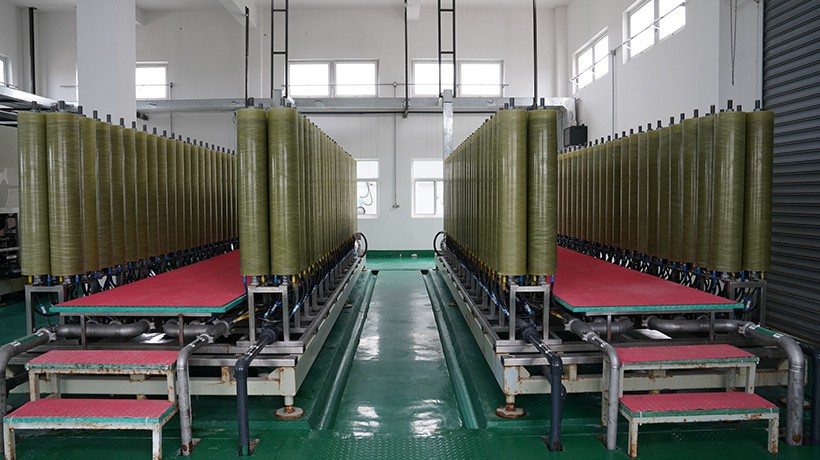
The operating principle of DTRO is based on high cross-flow turbulence.
Feed water enters the module from the bottom flange and is forced across membrane cushions through hydraulic discs. These discs create a double “S”-shaped flow path. The result is a highly turbulent flow regime that continuously scours the membrane surface.
This matters because membrane fouling and scaling are not only chemical problems. They are also fluid-dynamics problems. When water moves too slowly near the membrane, concentration polarization increases and dissolved salts begin to accumulate. DTRO reduces that boundary layer effect by keeping the flow highly active.
A DTRO module typically includes:
- membrane cushions
- hydraulic guide discs
- a central tie rod
- a pressure vessel
- high-pressure pumps
The membrane cushions can be replaced individually, which improves serviceability and reduces long-term maintenance burden.
The membrane cushions can be replaced individually, which improves serviceability and reduces long-term maintenance burden.
Conventional spiral-wound RO works well in many standard applications, but it has a structural weakness in harsh wastewater:
- narrow feed spacers can trap solids
- fouling accumulates quickly
- biofouling and scaling become difficult to control
- pressure drop rises fast
- cleaning becomes less effective over time
DTRO solves these problems through design.
Its open-channel architecture and turbulence-driven flow make it far more suitable for wastewater with:
- high TDS
- high COD
- high SDI
- hard-to-treat scaling ions
- unstable or highly variable feed quality
This is why DTRO is often selected when conventional RO has already reached its practical limit.
Conventional RO is usually better for cleaner, more stable feedwater. DTRO is better when the wastewater is harsh, unstable, and more likely to foul or scale the membrane.
UF and NF are useful in pretreatment or partial separation, but they do not replace DTRO in high-salinity concentration duties. When the goal is substantial volume reduction, DTRO is usually the more relevant separation step.
MBR depends on biological activity, so it is less suitable for toxic, high-salinity, or difficult-to-biodegrade wastewater. DTRO is a physical separation technology, which makes it more robust in such conditions.
MVR is used for thermal concentration and crystallization, but feeding it with too much volume or poorly concentrated wastewater is expensive and risky. DTRO reduces the feed volume first, which lowers the thermal duty, reduces MVR size requirements, and helps prevent coking and scaling in the evaporator.
DTRO does not replace the evaporator in ZLD. It helps the evaporator work better.
DTRO can handle very challenging streams. In extreme applications, operating ranges can reach 100,000–120,000 mg/L TDS, with some ultra-high-pressure systems designed for even more aggressive conditions.
The open channel and turbulent flow reduce concentration polarization and make it harder for solids to settle and accumulate on the membrane surface.
DTRO is especially useful as a volume reduction tool. It compresses brine before the thermal stage, which helps reduce downstream evaporation load.
Because membrane cushions can be replaced individually, maintenance is more flexible than with conventional spiral-wound elements.
DTRO is well suited to skid-mounted and containerized wastewater systems, especially where site installation needs to be fast and repeatable.
The following ranges are commonly referenced in DTRO applications:
- Pressure classes: 75 bar, 90 bar, 120 bar, and up to 160 bar in UHP systems
- TDS handling: typically up to 100,000–120,000 mg/L in extreme concentration service
- COD tolerance: up to around 30,000 mg/L in suitable applications
- pH operation: commonly around 3–11
- Recovery: must be set carefully according to scaling risk and feed characteristics
But DTRO is not unlimited. It has important design boundaries.
The most critical one is reverse pressure sensitivity. If there is back pressure on the permeate line or abnormal vacuum conditions in the feed line, the membrane cushions can inflate and be mechanically damaged by the support pins. For this reason, pressure balance, piping design, and control logic are essential.
Another important point is that DTRO is not immune to scaling chemistry. In high-fluoride systems, the main danger is often not fluoride directly attacking the membrane. The real issue is the formation of calcium fluoride (CaF₂) crystals, which can create physical abrasion and scaling damage under high pressure. Proper antiscalant dosing, softening, or recovery control is required.
DTRO is widely suited to mature landfill leachate, especially where the leachate has poor biodegradability, high salinity, and high ammonia content.
Aged leachate is often difficult for biological systems because it is toxic, variable, and resistant to conventional treatment. DTRO provides a physical barrier that is not dependent on microbial activity.
In many cases, a two-stage DTRO design is used to achieve discharge targets.
In chemical, power, and industrial wastewater projects, one of the biggest cost drivers is sending too much liquid to the thermal stage. If the upstream brine is not concentrated enough, MVR energy consumption becomes very high.
DTRO can reduce the load before MVR and help the system move from moderate brine concentration to a much more manageable thermal feed condition.
Wastewater containing high fluoride, calcium, silica, or other scale-forming ions is especially difficult for conventional RO. DTRO performs better because its open-flow design delays scale buildup.
For aggressive scaling risk, DTRO is often combined with softening or de-calcification to reduce the formation of CaF₂ and similar deposits.
These sectors often produce streams with high salinity, high metal loading, variable composition, and challenging operating conditions. DTRO is well suited for volume reduction, polishing, or front-end concentration in these applications.
A project should strongly consider DTRO when conventional RO begins to fail due to high TDS, high SDI, high COD, frequent scaling, rising pressure drop, or unstable operation. If the objective is high-concentration brine production for ZLD, DTRO is usually the more appropriate technology.
No. DTRO is a concentration and volume-reduction tool, not the final solid-salt recovery step. In a ZLD system, evaporation or crystallization is still typically required.
That question should not be answered by module price alone. A proper evaluation must include pretreatment footprint, downstream evaporation size, energy consumption, maintenance frequency, and plant uptime. In many harsh applications, DTRO reduces total lifecycle cost even if the membrane unit itself looks more expensive initially.
Yes. DTRO is often used in modular, skid-mounted, and containerized treatment plants, especially for landfill leachate and industrial wastewater with limited site space or fast deployment requirements.
Not in the simple way many people assume. The main risk is physical damage caused by CaF₂ crystallization, not direct chemical destruction by fluoride ions alone. Good scaling control is the real solution.
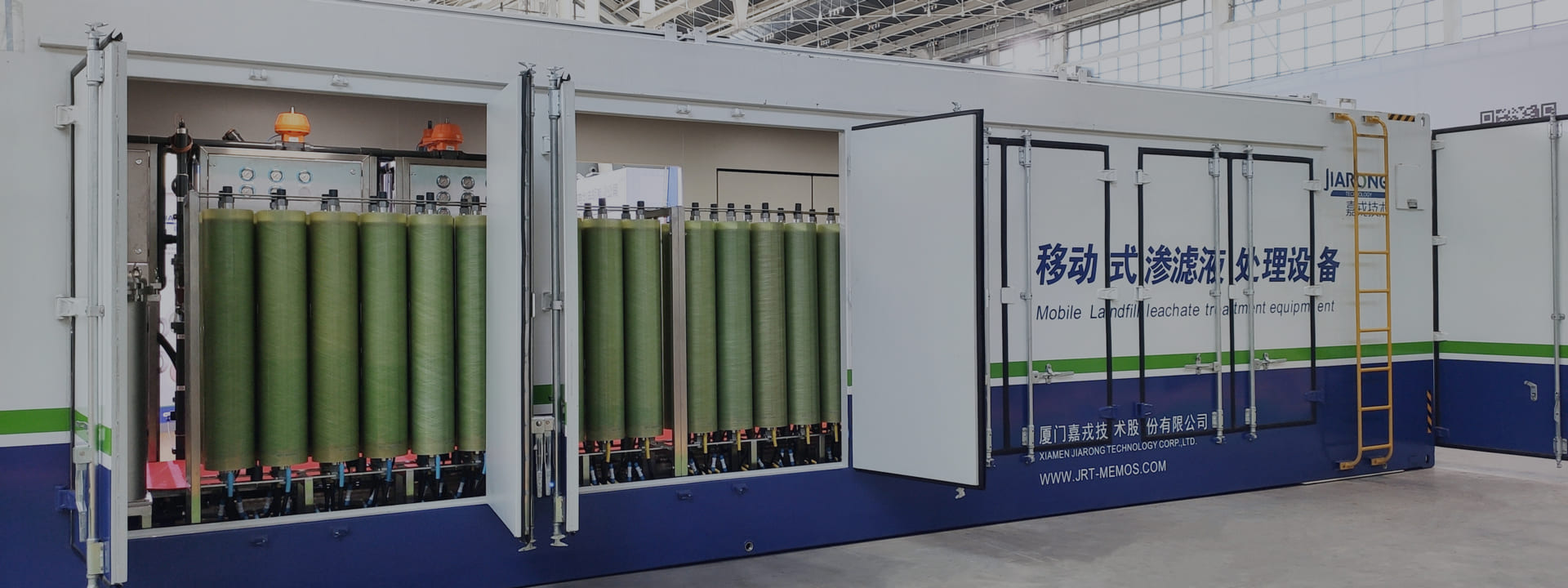
This project had a capacity of about 2,100 m³/day and used pretreatment, two-stage DTRO, HPRO, and MTRO. The desalination rate reached 96%–98% at around 90 bar, and the project handled more than 1.5 million tons of accumulated leachate.
This type of project shows how DTRO can function as a stable core unit in a large-scale leachate ZLD process.
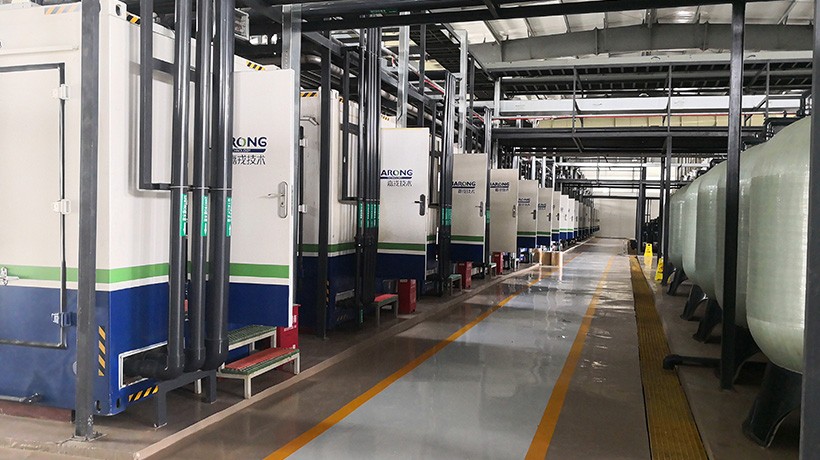
This project had a capacity of about 1,000 m³/day and treated influent with CODcr below 4,500 mg/L and TDS up to 50,000 mg/L. STRO was used to protect the MVR stage and reduce coking risk.
This illustrates one of the most important DTRO use cases: protecting thermal equipment through front-end concentration.
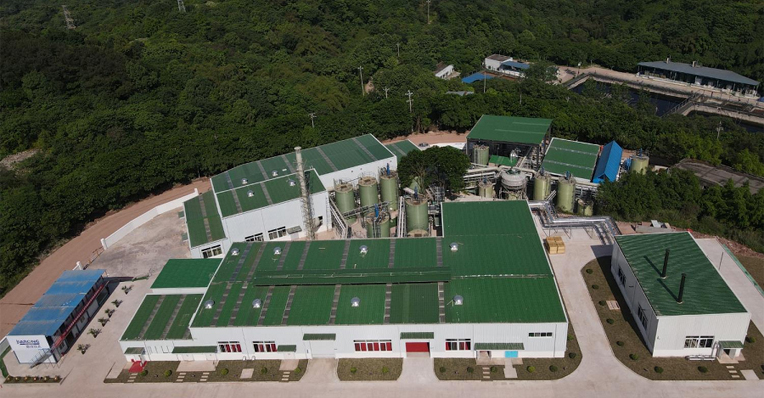
It is not. DTRO reduces volume, but the final crystallization step still usually requires evaporation or crystallization equipment.
It is robust, but not invincible. It is sensitive to reverse pressure and to physical damage caused by scaling crystals or poor hydraulic design.
That is a weak way to evaluate the system. The correct approach is lifecycle economics: pretreatment, evaporation load, downtime, replacement cycle, and operational stability.
For wastewater streams with high salinity, high COD, high hardness, high fluoride, or unstable composition, the real challenge is not whether membrane separation is possible. The challenge is whether the system can run stably for the long term.
DTRO is valuable because it pushes membrane technology into more extreme operating conditions than standard spiral RO can reliably handle. It is not the entire ZLD solution, but it is often the part that determines whether the front end of the plant succeeds or fails.
If a project is facing:
- RO fouling and scaling
- high TDS brine concentration needs
- excessive MVR energy consumption
- landfill leachate instability
- difficult high-fluoride or high-scaling wastewater
then DTRO deserves serious engineering evaluation.
DTRO offers a highly turbulent open-channel design that performs better in dirty, salty, and scaling-prone wastewater than conventional spiral RO.
No. DTRO is a front-end concentration tool. Final solid recovery usually still requires evaporation or crystallization.
Landfill leachate, high-salinity industrial wastewater, chemical wastewater, mining wastewater, metallurgy wastewater, and ZLD front-end concentration projects.
Because the main risk is not direct chemical attack, but CaF₂ scaling and physical damage. DTRO’s flow design helps reduce this risk.
Maintenance is generally more flexible than spiral-wound RO because individual membrane cushions can be replaced instead of replacing the entire element.
If your project is dealing with high TDS brine, landfill leachate, high COD wastewater, or difficult ZLD front-end concentration, a DTRO-based process review can help determine the right recovery strategy, pressure class, and downstream load balance.
A proper mass balance and PFD assessment is often the fastest way to identify whether DTRO can reduce risk, lower thermal load, and improve overall system economics.
Share your water quality data and discharge requirements, we'll help assess a feasible and stable treatment approach
Submit